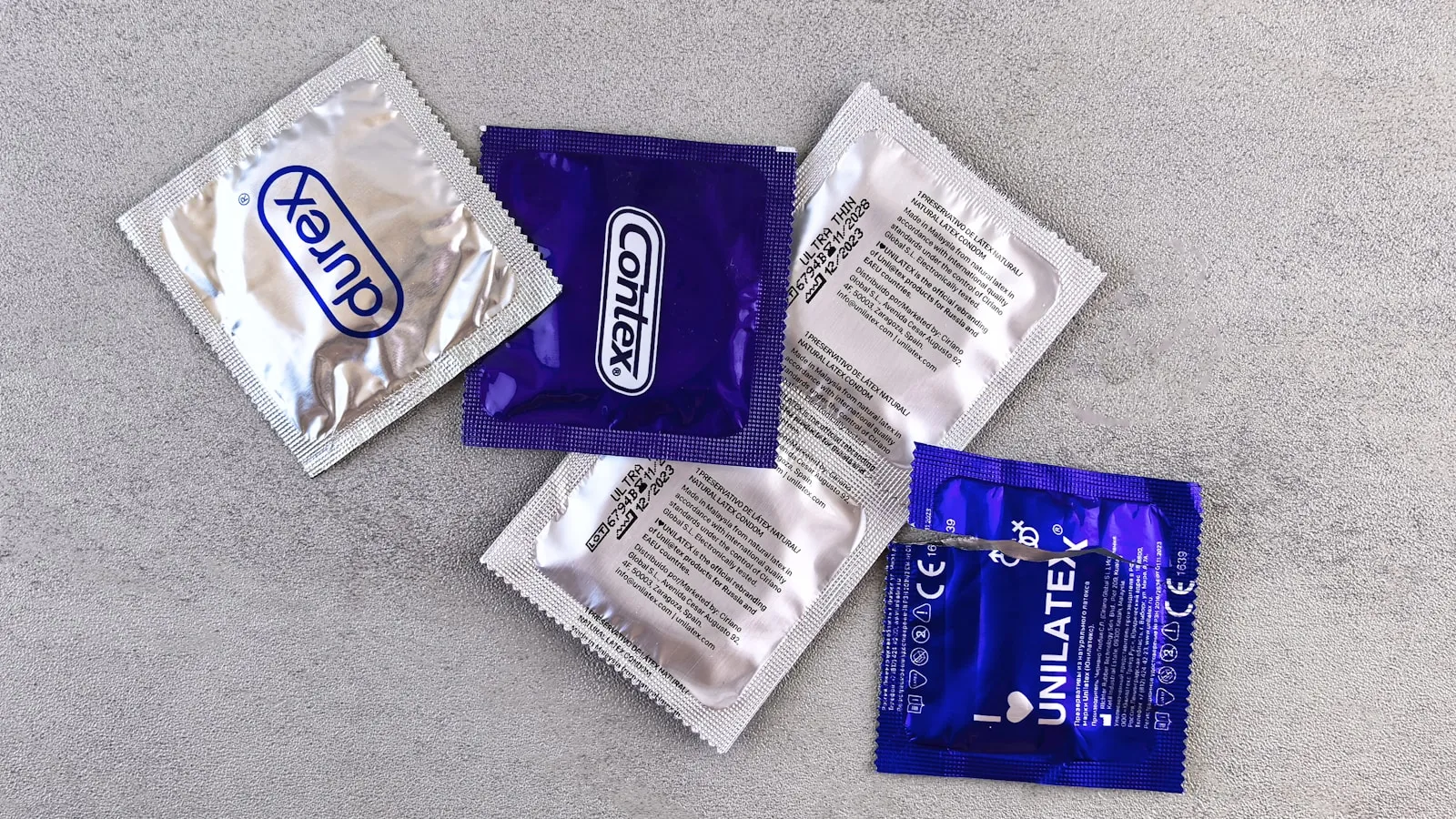
"Shall we stop using condoms?" It is a sentence that comes up in almost every new relationship, often somewhere between the third date and the moment a toothbrush stays behind. And usually a short silence follows. Because that same question also means: I trust you, and I have no idea what we are both carrying from earlier partners. This article is about that silence, and how to fill it in together without turning it into an interrogation.
We think getting checked together before you drop the condoms should be the most normal step in a relationship, more normal than booking a holiday together. It says nothing about distrust. It says you both take your health seriously.
Why check at this exact moment?
A condom strongly lowers the risk of most STIs. Drop it, and that protection falls away, so what one person carries suddenly becomes the other\'s concern too. The tricky part is that many STIs cause few or no symptoms. According to RIVM, a large share of chlamydia and gonorrhoea infections run without clear symptoms, so someone can carry one unknowingly for years. "I feel fine" is therefore not proof that nothing is going on.
That is why the switch to unprotected sex is exactly the right hook to sort it out once. Not out of fear, but because from that point on you are each other\'s only protection.
How do you start the talk without it becoming an accusation?
The trick is in the word "we". "Shall we both get checked before we stop using condoms?" lands very differently from "Have you ever been tested?". The first is a shared plan, the second feels like an exam.
Pick a calm moment, so not right before or during sex. Keep it short and phrase it from your own side. Most people feel relieved that it is named, because they were thinking about it too. If your partner does react a little hesitantly, that more often comes from embarrassment or awkwardness than from something to hide. Soa Aids Nederland offers practical tips for talking about testing with a partner.
What do you get checked for, and when?
Not every STI has the same window period, the time after a risk contact during which a test is not yet reliable. If you test too early, a result can be negative while something is still going on. The table below helps you plan together based on your last other partner.
| STI | Reliable to check from* | Test type |
|---|---|---|
| Chlamydia | ± 2 weeks | Urine / swab (also throat/anus after oral or anal contact) |
| Gonorrhoea | ± 2 weeks | Urine / swab (also throat/anus) |
| Syphilis | ± 6 weeks | Blood |
| HIV | ± 6 weeks (certainty up to ± 12 weeks) | Blood |
| Hepatitis B | ± 6 to 12 weeks | Blood |
*Indicative timings based on information from Thuisarts.nl and RIVM. The exact window period can differ per situation and per test, so when in doubt you can consult your GP or the GGD.
The practical takeaway: if you were with someone else less than two weeks ago, it may be worth delaying the chlamydia and gonorrhoea test a little, or doing a retest after a few weeks. If you had oral or anal contact, it may be wise to choose a test that also covers the throat and anus, since a standard urine or blood test does not always pick up those sites.
If you both want a broad picture in one go, you could look at a chlamydia, gonorrhoea and trichomonas test. If you are unsure which test fits your situation, read our guide on which STI test you need and when. For the timing in detail, how long after unprotected sex you can test explains more.
How do you keep it low-key and private?
Testing together can be very discreet. You order online, visit an ordinary collection point near you, and your results sit in a secure environment only you can open. For some couples it helps to do it at the same time, going together and waiting for the results together. That way no one has to carry it alone.
Do keep in mind that a self-arranged test is not a replacement for a doctor when you have symptoms or worries. If you have symptoms, or a positive result comes back, you can always discuss it with your GP or the GGD.
Taking that step together
Stopping condoms is a nice moment in a relationship, and it only gets more reassuring when you prepare it together. One shared check, account for the window period, and then move forward with a clean slate. No big drama, just something you arrange together.
Sources
- RIVM, STIs and testing: rivm.nl/soa
- Soa Aids Nederland, the STI test: soaaids.nl/nl/soa-test
- Thuisarts.nl, about STIs: thuisarts.nl/soa
Every blood test result includes a professional assessment from a BIG-registered doctor. Discuss treatment decisions with your GP.
Author
Discreettest
Dr. Naimi, BIG-registered physician, oversees the medical standards behind our content and assessments. Read our medical policy