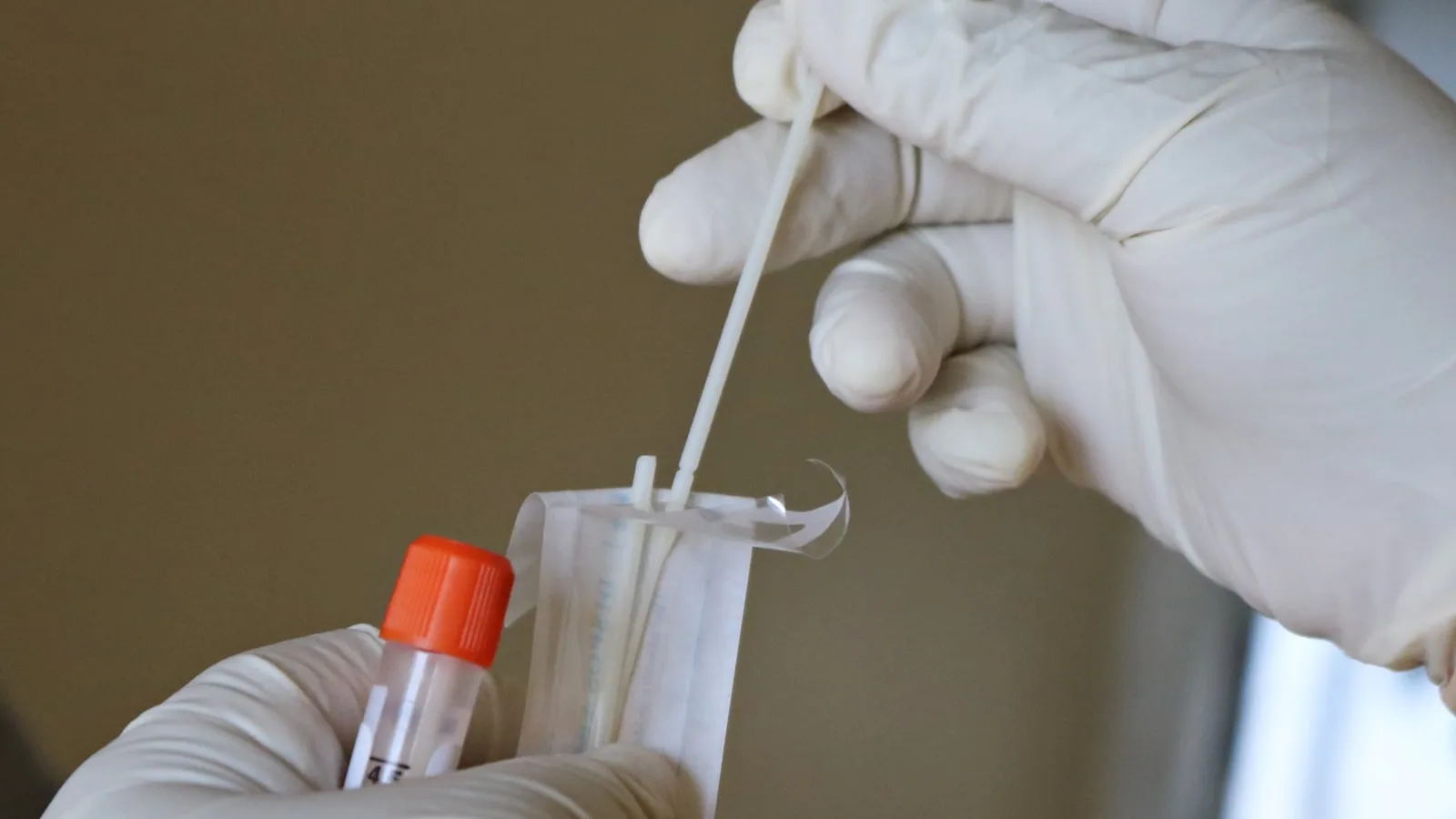
Something happened that you would rather had not happened, with someone other than your steady partner, and now you have a knot in your stomach. Not only because of what it means for your relationship, but also very practically: did I catch something, and could I have passed it on? That worry deserves a calm, factual answer, without judgement.
What we do here is not a moral story. Your health and your partner's are separate from questions of blame. The only relevant question is: how do you get reliable clarity, at the right moment, and as privately as you want.
The right moment: the window period
The biggest pitfall is testing too early. Right after a risk contact an infection is often not yet detectable, and a test that is too early gives false certainty. The table below gives a practical guideline per infection. Thuisarts.nl and the RIVM use similar windows, and when in doubt repeating after the window is wise.
| Infection | Earliest reliable test | Note |
|---|---|---|
| Chlamydia and gonorrhoea | From about 2 weeks | Often without symptoms |
| HIV | From about 6 weeks (fourth-generation test) | Testing earlier can be false-negative |
| Syphilis | From about 6 weeks | Sometimes a repeat is needed |
| Hepatitis B | From about 6 to 12 weeks | Discuss with a doctor or the GGD if unsure |
If you want to understand this more deeply, read how long after sex you can test.
A practical pitfall: many people test once, soon after the contact, get a negative result and think they are done. But if you tested within the window, that single result says little. For HIV and syphilis a repeat after the full window is often wise. The honest rule is: early reassurance is not reassurance, only a test at the right moment counts.
If you want unprotected sex with your steady partner again, it is wise to wait for your results first, and to use a condom when in doubt until you are sure. That protects your partner and prevents you from passing on a possible infection unnoticed.
Which check fits after a slip?
After unprotected contact with a new or unknown partner a broad panel is usually wiser than a single test, because you do not know exactly what you were exposed to. A chlamydia, gonorrhoea and trichomonas test covers the most common infections at once. If you are mainly worried about a specific infection, a targeted HIV check or chlamydia check can be enough. If you are unsure, use our guide on which STI test you need when.
If the contact was oral or anal, also think of a throat or anal sample, because chlamydia and gonorrhoea can settle there without a urine test picking it up. It is a detail that is often forgotten, but it makes the difference between a complete and a half check. When in doubt, be honest about what happened so the right samples are taken.
No symptoms does not mean safe
A stubborn misconception is that you would notice if you caught something. It is precisely the most common STIs, such as chlamydia, that often run their course without any symptoms. So you can feel perfectly healthy and still be infected, and pass it on without knowing. That is why testing after a risk contact makes sense, even if nothing is bothering you. Do not wait for symptoms that may never come.
If you regularly have changing contacts, a periodic check, for example every few months, is a sensible habit. It takes the tension out of single moments like this one, because you know where you stand anyway.
Arranging it privately and anonymously
In a sensitive situation you often do not want it visible to your steady partner, your insurer or your GP. An anonymous home test leaves no trace in your medical record and you pay yourself, so your insurer sees nothing. What gets recorded per route, you can read in whether an STI test goes on your medical record.
And if you test positive?
A positive result usually means good news in the long run: you know, and most STIs are easy to treat. It does raise the question of whether and how you inform your partners. That does not have to become a drama, and anonymous partner notification via Soa Aids Nederland can help. For that, read telling your partner after a positive STI result.
A test confirms or rules out an infection, but does not replace medical advice. If you are unsure about the right moment or about symptoms, talk to a doctor or the GGD.
Author
Discreettest
Dr. Naimi, BIG-registered physician, oversees the medical standards behind our content and assessments. Read our medical policy