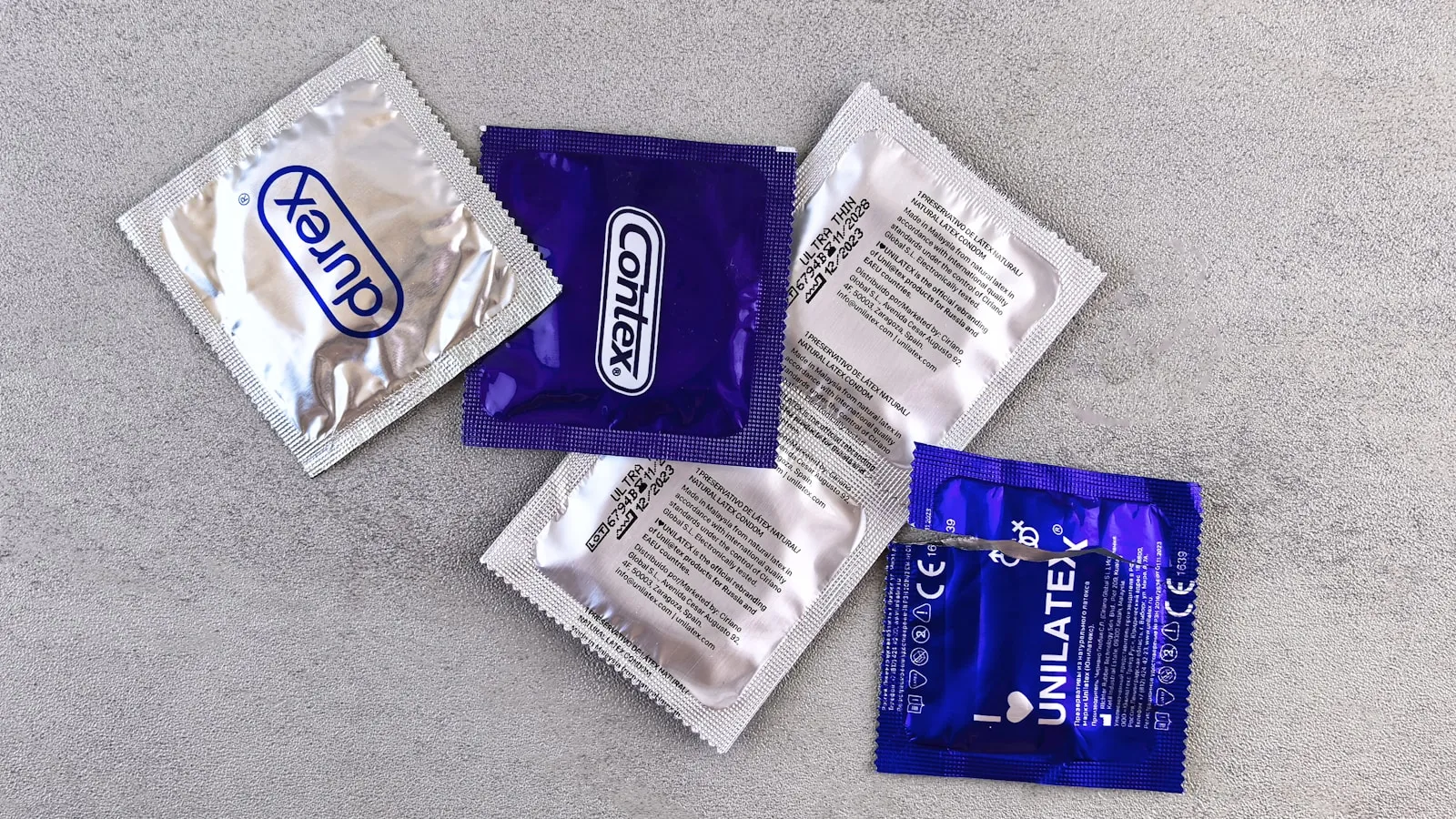
"But I only had oral, right?" It is one of the most common questions we come across, often with a mix of relief and doubt. And that is exactly where the misunderstanding sits: oral sex feels safe to many people, while it really can transmit STIs. At the same time the fear of the toilet seat and the shared towel lives on, while the risk there is actually negligibly small. Time to lay the routes out soberly side by side.
Our position: people worry about the wrong things. The toilet seat is almost never the problem, oral contact is too easily dismissed as risk-free.
STI risk per route
The chance depends on how an STI spreads: through mucous-membrane-to-mucous-membrane contact and bodily fluids, not through brief contact with a surface. This table lays it out.
| Route | Risk of an STI | Why |
|---|---|---|
| Oral sex (giving or receiving) | Real | Chlamydia, gonorrhoea, syphilis and herpes can pass via the throat or genitals |
| Unprotected vaginal or anal sex | High | Direct mucous-membrane-to-mucous-membrane contact, the main route |
| Deep kissing | Small, not zero | Mainly herpes (cold sore) can pass via saliva and mucous membrane |
| Toilet seat | Negligible | STI germs barely survive outside the body and do not enter through intact skin |
| Shared towel or flannel | Very small | Theoretically conceivable for pubic lice or trichomonas via wet textile, rare in practice |
| Swimming pool or sauna | Negligible | Chlorine and dilution make transmission practically impossible |
Why oral does carry risk
During oral sex the mucous membrane of the mouth comes into contact with genital mucous membrane or bodily fluid. Chlamydia and gonorrhoea can settle in the throat as a result, often without complaints. Syphilis and herpes also spread via this route. Soa Aids Nederland explains at soaaids.nl that a throat infection with gonorrhoea or chlamydia is regular and precisely therefore often missed: without complaints you do not test. For an STI check it is therefore wise to weigh oral contacts and have the throat checked if needed.
Why the toilet seat is almost no risk
The germs that cause STIs, whether bacteria such as chlamydia and gonorrhoea or viruses such as HIV, barely survive outside the human body. They need warmth, moisture and living mucous membrane. A toilet seat is cold, dry and your skin is intact: no entry route. The RIVM stresses in the information accompanying its STI figures that transmission via toilet seats is not realistic. The stubborn myth mainly keeps shame alive, and shame is exactly what stands in the way of testing.
When and how do you get checked?
If there has been unprotected oral, vaginal or anal contact, a check is wise, even without complaints. Chlamydia and gonorrhoea can be checked reliably from about 2 weeks after contact, syphilis and HIV from about 4 weeks. A targeted chlamydia check or gonorrhoea check is enough for a specific risk. If you want broad certainty after varied contact, the combined check covers the most common bacterial STIs at once, optionally supplemented with an HIV check. The exact window periods are in how long after sex you can test.
More stubborn misunderstandings
Many myths live around STIs that cause unnecessary stress or false reassurance:
- "No complaints means no STI." Incorrect: many STIs run without symptoms.
- "You can tell from someone whether they have an STI." Incorrect: that is almost never visible.
- "Testing once is enough." Not always: window periods can mean a retest is needed.
- "The pill protects against STIs." Incorrect: the pill prevents pregnancy, not STIs.
What does protect, and what does not?
Once you know the real routes, it also becomes clear what offers protection. A condom considerably reduces the risk during vaginal, anal and oral sex, although it does not cover all skin contact, so herpes and warts can still pass. A dental dam offers protection during oral sex on the vulva or anus. Clear agreements and testing together before you stop using condoms lower the risk within a relationship, a topic we work out in testing together in a new relationship. What offers no protection: avoiding the toilet seat, using your own towel in normal situations, or trusting how someone looks. Focus your energy on the routes that really matter.
Home test, GGD or GP: where do you get checked?
After unprotected oral, vaginal or anal contact, a check is wise, even without complaints. An anonymous test you arrange yourself online is a low-threshold route for this: your sample is taken at a collection point and you get your results online, without it going into your GP file. The GGD sometimes tests for free, but with conditions around age and risk group, so not everyone qualifies. If a throat infection was a factor after oral contact, mention it so the throat can be included. More on the GGD route is in GGD test refused.
You can read more on this in five STI myths, debunked. For the full testing overview, which STI test you need when is your starting point. It comes down to knowing the real routes: oral and unprotected sex need attention, the toilet seat mainly needs you to let the myth go.
الكاتب
Discreettest
Dr. Naimi، طبيب مسجل في سجل BIG الهولندي، يشرف على المعايير الطبية لمحتوانا وتقييماتنا. اقرأ سياستنا الطبية
فحوصات ذات صلة
مقالات ذات صلة

How long is scabies contagious?

How do you get pubic lice? And does shaving help?