How do you get pubic lice? Almost always through direct, prolonged physical contact where pubic hair meets pubic hair. Sex is the most common route, though sharing a bed or intimate cuddling can be enough. The louse cannot jump and cannot fly, so it has to walk across.
That single fact shrinks most of the scare stories.
A louse needs coarse hair to grip with its claws. Anything smooth offers it nothing.
Can you get pubic lice from a toilet seat?
Practically no. A pubic louse has to cling to hair and survives only about one to two days away from a body. A smooth plastic toilet seat gives it nothing to hold, and the time you spend on it is short anyway.
This myth persists because it is convenient.
It offers an explanation that requires no conversation. We understand the reflex, but it helps nobody, because without the real source the infestation keeps circulating. More misconceptions are covered in 5 STI myths debunked.
Can you get it from clothing or bedding?
You can, but it happens far less often than people think. Lice and nits can briefly end up in bedding, towels or underwear. Away from a human body they die within a day or two, so only recently used textiles matter.
Which is why washing at 60 degrees is enough.
| Situation | Risk of pubic lice | Why |
|---|---|---|
| Sex or intimate skin contact | High | Pubic hair meets pubic hair, the louse walks over |
| Sharing one bed | Low to moderate | Prolonged contact, but often through clothing |
| A towel or bedding used today | Low | The louse is alive but still has to find hair |
| Toilet seat | Negligible | Smooth surface, brief contact |
| Swimming pool or sauna | Negligible | Water and heat, no hair contact |
| Shaking hands | None | No coarse hair, too brief |
The top row explains nearly every real infestation. The bottom four are the rows people come looking for.
Does shaving help against pubic lice?
Shaving removes the habitat, so it helps, but it is rarely a complete solution. Thuisarts.nl mentions shaving pubic hair as an alternative alongside the cream. The problem is that lice can also live in armpit hair, leg hair, chest hair or a beard, and most people do not shave those.
You relocate them rather than losing them.
There is a larger effect at population level. Researchers see pubic lice declining worldwide and point to grooming fashions: less coarse hair means less habitat (Patel et al., 2021). What works at population level is simply not the same as a treatment for you.
If you genuinely want rid of them, treatment with permethrin remains the most reliable route.
How long before you notice anything?
With a first infestation it usually takes two to four weeks before the itch starts. Your immune system has to learn to react to the louse's saliva. With a second infestation the itch can appear within days.
That delay makes tracing the source harder.
So for a first infestation, think back over roughly a month, not over the past week. Thuisarts.nl advises informing sexual partners from the past two months, which is wider than most people would choose on their own.
Does a condom protect against pubic lice?
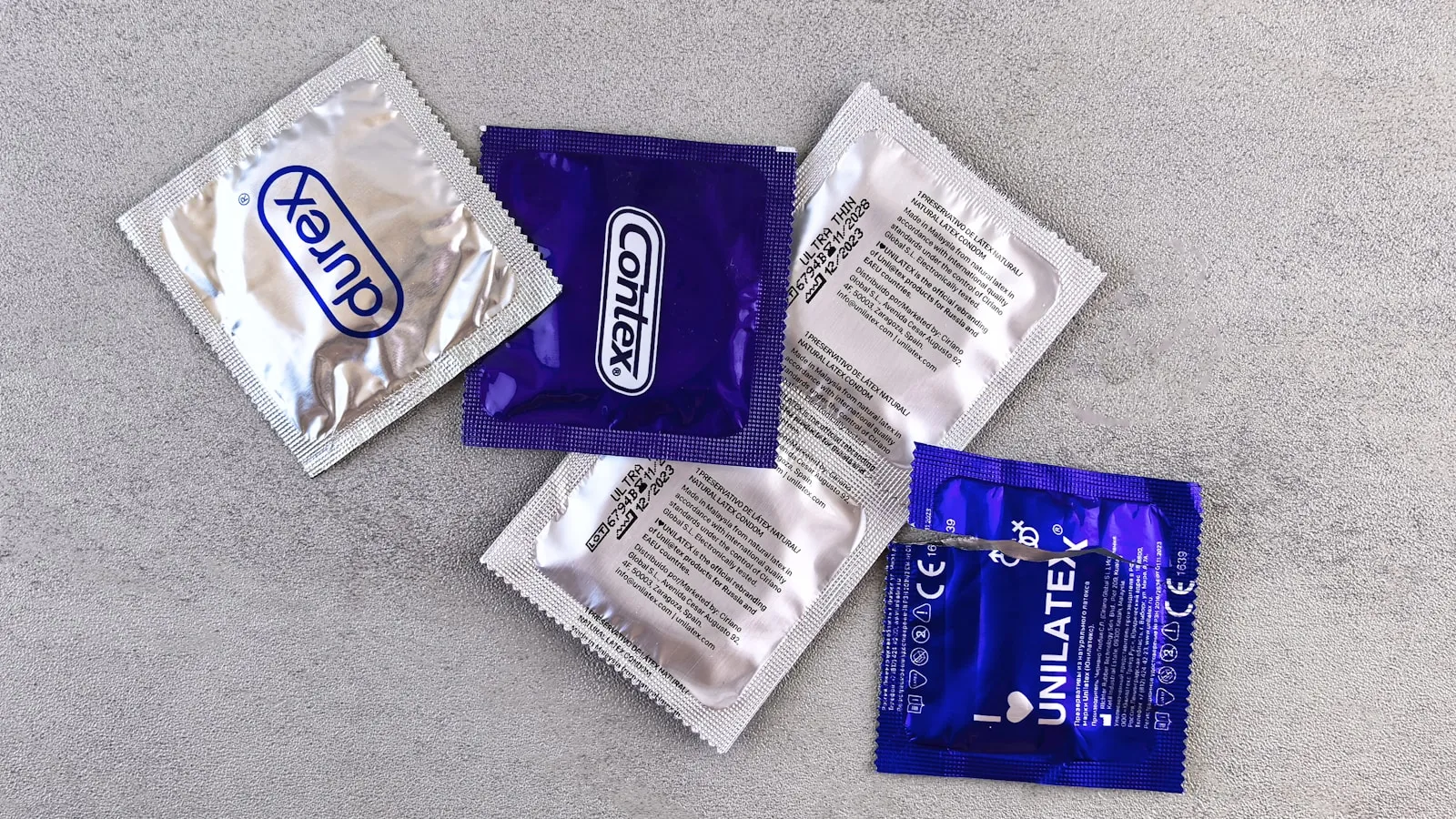
No. A condom covers the penis, not the pubic area around it, and that is exactly where the hair the louse lives in sits. The same applies to scabies, to herpes on the skin next to it, and to HPV warts outside the covered area.
A condom is still useful, just not for this.
Which method lowers which risk is set out per infection in safe sex. That difference between skin contact and fluid contact explains almost everything on this topic.
What if you know who you got it from?
Then you treat at the same time, otherwise it travels back and forth. Beyond that, this is the moment where the contact itself becomes more relevant than the lice. Chlamydia, gonorrhoea and trichomonas pass through the same contact and often cause no symptoms.
In one STI clinic series, 31.4 percent of people with pubic lice had another STI alongside it (Chapel et al., 1979).
Some people therefore also choose to get checked for chlamydia, gonorrhoea and trichomonas, usually from around two weeks after the risk. The full picture sits in our main article on pubic lice, and you discuss any result with your GP.
References
- Patel PU, Tan A, Levell NJ. A clinical review and history of pubic lice. Clinical and Experimental Dermatology, 2021. PMID 33811771
- Chapel TA, Katta T, Kuszmar T, DeGiusti D. Pediculosis pubis in a clinic for treatment of sexually transmitted diseases. Sexually Transmitted Diseases, 1979. PMID 531724
- Thuisarts.nl, Ik heb schaamluis. thuisarts.nl
- RIVM, LCI guideline scabies. lci.rivm.nl
Every blood test result includes a professional assessment from a BIG-registered doctor. For treatment decisions, discuss your results with your GP.
الكاتب
Discreettest
Dr. Naimi، طبيب مسجل في سجل BIG الهولندي، يشرف على المعايير الطبية لمحتوانا وتقييماتنا. اقرأ سياستنا الطبية
فحوصات ذات صلة
مقالات ذات صلة

How long is scabies contagious?
Safe sex: 8 ways to lower your risk of an STI