You want to get checked, but you do not want your name showing up anywhere. That is possible, and it is easier than you think. An anonymous STI test means you test without a referral, without a GP appointment and without a note in your medical record. Below you read exactly how that works.
I will walk you through it step by step, so you know where you stand before you begin.
Prefer to arrange it directly? You can request an anonymous STI test here and choose which STIs to test for.
What exactly is an anonymous STI test?
An anonymous STI test is a check you arrange and pay for yourself, outside your GP and health insurer. Nothing enters your GP record and no claim goes to your insurance. You share only the details needed to get your result to you safely.
That is different from the GGD, where you do register. At the GGD your test is confidential, but not fully anonymous.
How does it work step by step?
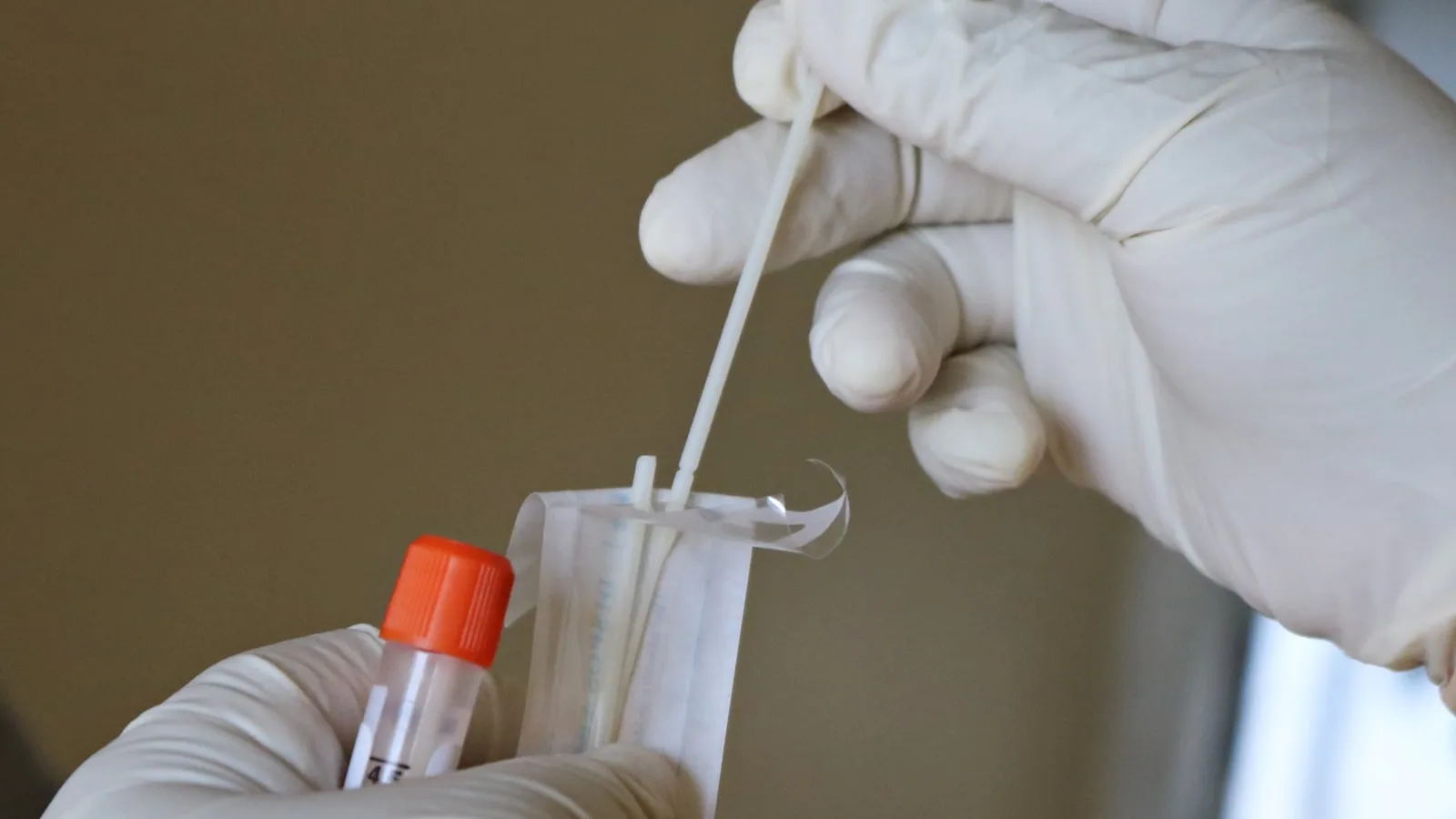
In short: you order a test online, you take a sample at home or go to a sampling location, the laboratory analyses your sample, and you receive your result securely. No waiting room, no front desk, no explaining beforehand.
| Step | What you do | What stays private |
|---|---|---|
| 1. Order | Choose a test or panel online and pay yourself | No referral, no GP involved |
| 2. Collect | Take a urine or swab sample at home, or go to a sampling location | Self-collection can be entirely at home |
| 3. Analysis | The lab tests your sample with the same techniques as the GP | Your sample runs under a reference, not your record |
| 4. Result | You view your result securely online | Nothing to your insurer or record |
To start without a wait, an STI test without an appointment can be the fastest route.
Does it really stay anonymous?
Yes, as long as you pay yourself and the test runs outside your GP, your check stays anonymous. There is no claim and no record note. The RIVM stresses that a low-threshold, confidential testing route matters to keep testing accessible, precisely because shame holds people back.
To know exactly what is recorded where, read whether an STI test enters your medical record.
How reliable is anonymous home collection?
Anonymous does not mean less reliable. For chlamydia and gonorrhoea, self-collection is about as accurate as health-worker collection in comparative research, with a sensitivity around 90 percent (PMID 26168051). The lab technique is the same.
Reliable HIV self-tests exist too. A large review showed that HIV self-tests increase the number of people who get tested, without quality suffering (PMID 28530049). And a randomised trial with postal home sampling nearly doubled the number of testers (PMID 29281628).
So the ease of anonymous collection mainly removes a barrier.
What does an anonymous STI test cost?
An anonymous STI test has a fixed price you see up front and pay yourself. You have no excess and no unexpected bill afterwards. What you pay depends on whether you pick a single test or a broader panel.
Unsure which place suits you best? Read where you can test anonymously. To check broadly at once, an STI screen for chlamydia, gonorrhoea and trichomonas covers the most common bacterial infections. For more background, see the guide on STI testing at home.
Is anonymous testing safe and sensible?
Yes. Anonymous testing is not only legal, it also lowers the threshold to get checked in time. Precisely because shame and fear of registration hold people back, a discreet route is valuable. You get the same lab quality, just without the administrative traces.
The next step still matters. If you test positive, you arrange treatment with a doctor or the GGD, and you tell your partner from the recent period. Anonymous testing is the start, good care makes it complete.
Sources
- Lunny C, et al. Self-Collected versus Clinician-Collected Sampling for Chlamydia and Gonorrhea Screening: A Systematic Review and Meta-Analysis. PLoS One. 2015. PMID 26168051.
- Jaya ZN, et al. Accuracy of self-collected versus healthcare worker collected specimens for diagnosing sexually transmitted infections in females: an updated systematic review and meta-analysis. Scientific Reports. 2024. PMID 38714714.
- Jamil MS, et al. Examining the effects of HIV self-testing compared to standard HIV testing services in the general population: a systematic review and meta-analysis. EClinicalMedicine. 2021. PMID 34278282.
- Johnson CC, et al. Examining the effects of HIV self-testing compared to standard HIV testing services: a systematic review and meta-analysis. Journal of the International AIDS Society. 2017. PMID 28530049.
- Wilson E, et al. Internet-accessed sexually transmitted infection (e-STI) testing and results service: a randomised, single-blind, controlled trial. PLoS Medicine. 2017. PMID 29281628.
- RIVM. Sexual health and STIs: information and guidelines. rivm.nl.
- Thuisarts.nl / NHG. I want to get tested for an STI.
An STI test can confirm or rule out an infection, but it does not replace a consultation. Our results are reviewed by a doctor, and with symptoms, doubt or a positive result you should talk to a doctor or the GGD.
Author