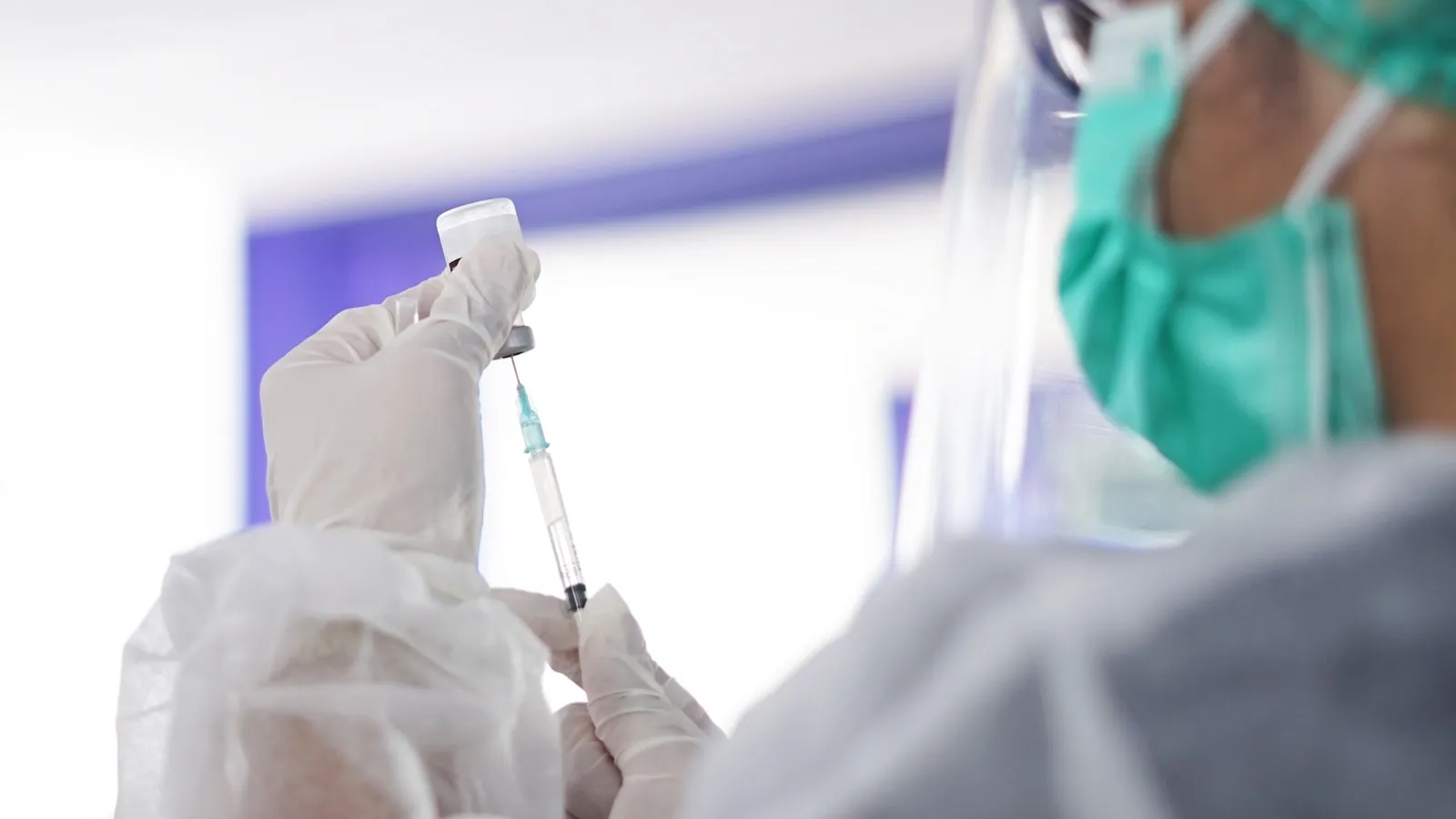
Yes, HPV is an STI. The human papillomavirus is passed on through sexual contact, and it is the most common STI worldwide. Yet no STI test finds it. Not ours either.
That is an odd sentence to write as a test provider. We are writing it anyway, because the confusion around this costs people money and peace of mind.
Anyone who books a "complete STI check" after finding a wart will get a result back with no HPV in it. Not because you do not have it, but because nobody looked. Below you will read why, and what you can do instead.
Is HPV an STI?
Yes. HPV passes through skin-to-skin contact during sex, which makes it an STI. There are more than two hundred types. Some cause genital warts (mainly types 6 and 11), others can cause cell changes after years (mainly types 16 and 18). Most people clear the virus by themselves.
That last point is not a footnote. It is the heart of the whole story.
Research into the natural course shows HPV infections in young women mostly come and go, and that the immune system usually clears them (Ho, 1998). Having HPV is the rule rather than the exception, and it is almost never permanent.
Why does an STI test not find HPV?
Because HPV lives in your skin cells and not in your blood or urine. An STI panel looks for antibodies, or for the DNA of bacteria in blood or urine. HPV is not there. To detect HPV you need cells from the site itself, and in the Netherlands that only happens at the cervix.
So this is not about a test we choose not to buy. It is biology.
Picture this: you see a wart, you take fright, and you book a panel with 8 markers. Two days later eight results come back: chlamydia negative, gonorrhoea negative, trichomonas negative, HIV negative, syphilis negative, and so on. All reassuring. And about the one thing keeping you awake, that wart, it says nothing. Not because it is not there, but because none of those eight markers looks for it.
| Investigation | What it measures | Does it find HPV? |
|---|---|---|
| Blood test | Antibodies against HIV, syphilis, hepatitis, HSV | No |
| Urine PCR | DNA of chlamydia, gonorrhoea, trichomonas, mycoplasma | No |
| Smear or self-sampling kit | High-risk HPV in cells from the cervix | Yes, but only the high-risk types |
| A doctor looking | Visible warts on the skin | Yes, this is the only way to establish warts |
Read that table from the bottom up. The only two methods that say anything about HPV are a smear (high-risk only, cervix only) and a doctor looking at your skin. A tube of blood does neither.
Is HPV the same as herpes?
No. They are two different viruses that get mixed up constantly. HPV causes firm, painless warts. Herpes (HSV-1 or HSV-2) causes painful blisters that break open and heal, and that return in episodes. The key practical difference: herpes can be tested in blood, HPV cannot.
That difference decides what you should do next.
If you are unsure whether that bump is a wart or a blister, HSV-1 and HSV-2 can be measured in blood, with the caveats we explain in genital herpes. The visual comparison sits in what genital warts look like.
Can you get HPV from kissing?
That is unlikely where genital warts are concerned. HPV spreads through skin-to-skin contact of the genital skin and mucous membranes. Oral HPV does exist, but transmission through ordinary kissing is not the usual route. In practice, worry about a kiss is rarely justified.
A condom clearly lowers the risk during sex, by the way, but does not remove it. With consistent condom use researchers saw 37.8 HPV infections per 100 patient-years, against 89.3 with rare use (Winer, 2006). That is because a condom does not cover all the skin that makes contact.
What if HPV was found in the screening programme?
Then high-risk HPV was found in cells from your cervix. That does not mean you have cancer, and usually it does not mean you have to do anything. RIVM invites you for follow-up because they want to know whether there are cell changes. Most of these infections clear on their own.
Important: this is separate from warts. High-risk HPV does not cause warts, and low-risk HPV does not cause cell changes.
We work that distinction out fully in vaginal warts. For the result itself, always follow the screening programme letter and your GP. The HPV vaccine in the national immunisation programme protects against several types, and after vaccination was introduced researchers saw substantial drops in infections and warts across several countries (Drolet, 2019).
So what can you have checked?
The STIs you cannot see or feel. Chlamydia and gonorrhoea often run without symptoms and are found well by a urine PCR. HIV, syphilis and hepatitis B sit in the blood. Those are concrete questions with concrete answers, usually within a few days.
HPV mostly hands you questions. The rest hands you answers.
- Chlamydia, gonorrhoea and trichomonas: the urine PCR test.
- HIV, syphilis and hepatitis B: the Viral Infections Package.
- Pick your own: a custom test.
If you see a bump, go to your GP. Thuisarts.nl explains what happens in that consultation, and it rarely takes long. If you first want to understand which test answers which question, start with which STI test do you need and when, or read our hub on genital warts and HPV.
References
- Steben M, Garland SM. Genital warts. Best Pract Res Clin Obstet Gynaecol. 2014;28(7):1063-1073. PMID 25155525.
- Ho GY, Bierman R, Beardsley L, Chang CJ, Burk RD. Natural history of cervicovaginal papillomavirus infection in young women. N Engl J Med. 1998;338(7):423-428. PMID 9459645.
- Winer RL, Hughes JP, Feng Q, et al. Condom use and the risk of genital human papillomavirus infection in young women. N Engl J Med. 2006;354(25):2645-2654. PMID 16790697.
- Drolet M, Bénard É, Pérez N, et al. Population-level impact and herd effects following the introduction of human papillomavirus vaccination programmes: updated systematic review and meta-analysis. Lancet. 2019;394(10197):497-509. PMID 31255301.
- RIVM. Cervical cancer screening programme and HPV. Available via rivm.nl.
- Thuisarts.nl (NHG). I have genital warts. Available via thuisarts.nl.
This information is general and does not replace personal medical advice. Every STI test result at Discreet Test is reviewed by a BIG-registered doctor. Always discuss symptoms or treatment decisions with your GP, the GGD or a Centre for Sexual Health.
الكاتب
Discreettest
Dr. Naimi، طبيب مسجل في سجل BIG الهولندي، يشرف على المعايير الطبية لمحتوانا وتقييماتنا. اقرأ سياستنا الطبية