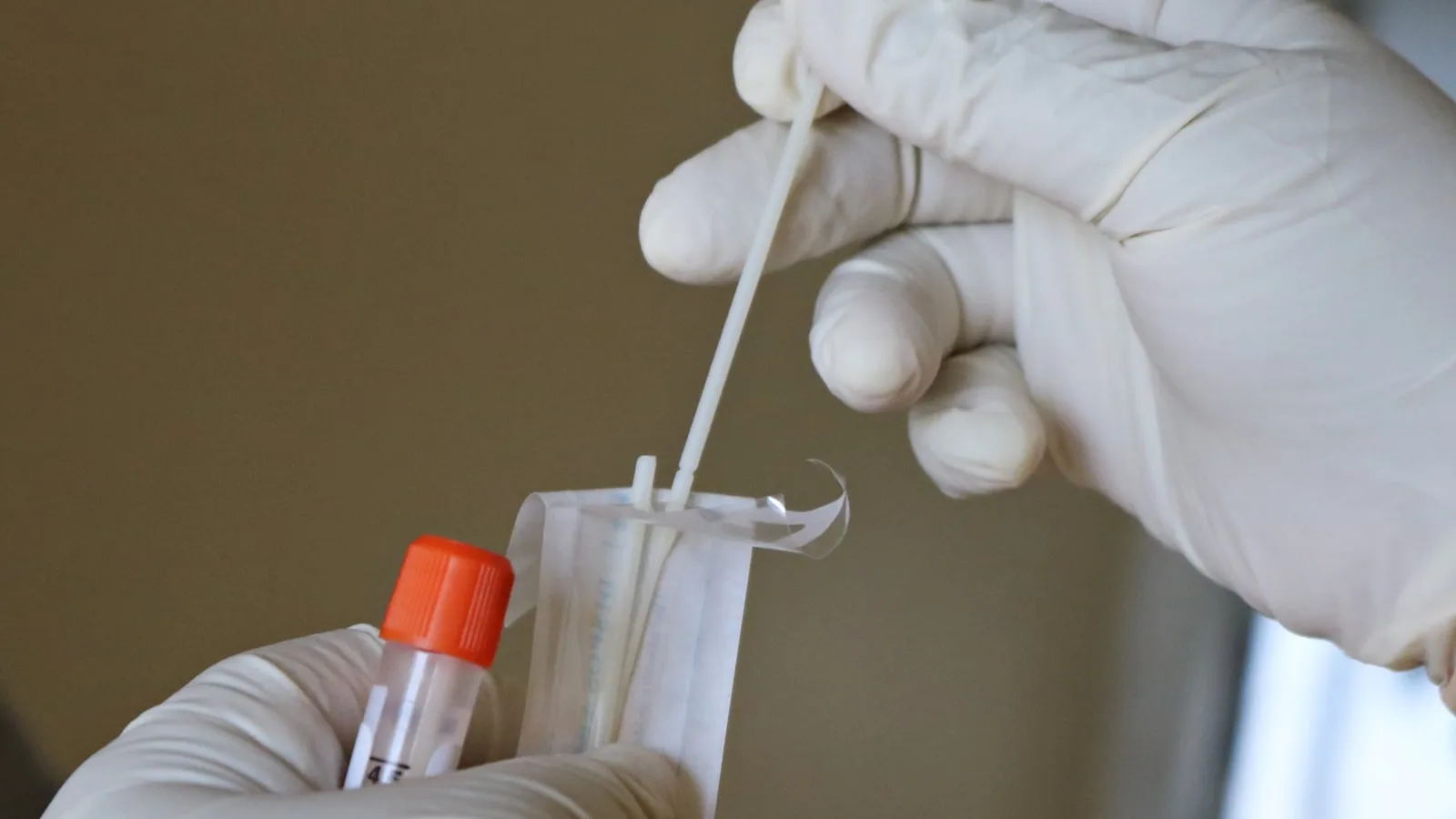
Maybe you have a medical assessment coming up, maybe you simply do not want a check to be visible to your insurer or to later care providers. What exactly gets recorded when you get checked is a fair question, and the answer differs sharply by route. On one route it is in black and white in your file, on another there is no traceable trace at all.
The core in one sentence: whether an STI test goes on your medical record depends entirely on where you test, not on the result. A negative result at the GP is recorded just as much as a positive one. If you do not want that, you deliberately choose a different route.
What gets recorded where?
The table below shows per route what is stored about you and who can in principle view it.
| Route | In GP record? | Visible to insurer? | Anonymous possible? |
|---|---|---|---|
| GP | Yes, test and result | Indirect: lab costs via your excess | No |
| GGD STI clinic | No, but registered with the GGD | No | Partly, data stays with the GGD |
| Self-arranged test, self-paid | No | No | Yes |
The GP: everything in the file
Ask your GP for an STI test and they record the request and the result in your medical file. That is a legal requirement and part of good care. That file is not public, but it can play a role in cover, a referral or a later care request. In addition the lab costs run through your health insurance, which means your insurance excess may be charged. Your insurer sees no diagnosis, but does see that lab costs were incurred.
Worth knowing: an insurer or employer cannot simply access your GP file. For a life insurance policy with a medical assessment you may be asked to share data, and a pre-employment assessment is bound by strict rules. In practice a negative STI result is rarely a problem, but if on principle you want no trace, that is a legitimate reason to choose a different route.
You always have the right to view your own file, by the way, and you can ask your GP exactly what has been recorded. Deleting correct medical data is usually not possible, but at least you then know what it says.
The GGD: separately registered
The GGD's STI clinic falls outside your GP record. The data stays within the centres for sexual health and is, as the RIVM describes, used anonymously for national surveillance of STI figures. For you this means a GGD test does not automatically reach your GP, though the GGD may advise you to inform your GP after a positive result.
The self-arranged test: no traceable trace
A test you order and pay for yourself online stands entirely apart from regular care. Your sample is taken at an ordinary collection point, outside the GP chain. No GP is involved, so nothing enters your file, and because you pay yourself your insurer sees nothing. On an anonymous route your results are not linked to a medical file. If you simply want a broad, private check, a STI screen for chlamydia, gonorrhoea and trichomonas can offer that, or a targeted HIV check if that is your specific concern.
Anonymous or still traceable?
Mind the difference between anonymous and private. Many online tests are private, but do link your result to your name or email for delivery. Truly anonymous means your results are not tied to a traceable medical file. If you want it maximally shielded, deliberately choose a route that explicitly works anonymously and pay with a method you are comfortable with. The difference sounds subtle, but it decides whether a trace is left somewhere.
Important exception: notification duty
Privacy is broad, but not unlimited. For a small number of infections the Netherlands has a notification duty to the GGD, regardless of where you test. HIV and most common STIs such as chlamydia do not fall under it in the regular setting, but acute hepatitis B and syphilis, for example, are notified for source and contact tracing. The RIVM manages this notification structure under the Public Health Act. That notification serves public health and is not meant to harm you.
Want more on privacy and routes? The main guide to collection point or home test gives the full picture. See also how an anonymous STI test works and where you can test anonymously.
If you want to know how to handle things with your partner after a positive result, read telling your partner after a positive STI result. And if you are unsure which check fits, use our guide on which STI test you need when. A test confirms or rules something out, but with symptoms or doubt, talking to a doctor remains wise.
Autor
Discreettest
Dr. Naimi, lekarz wpisany do holenderskiego rejestru BIG, nadzoruje standardy medyczne naszych treści i ocen. Przeczytaj naszą politykę medyczną