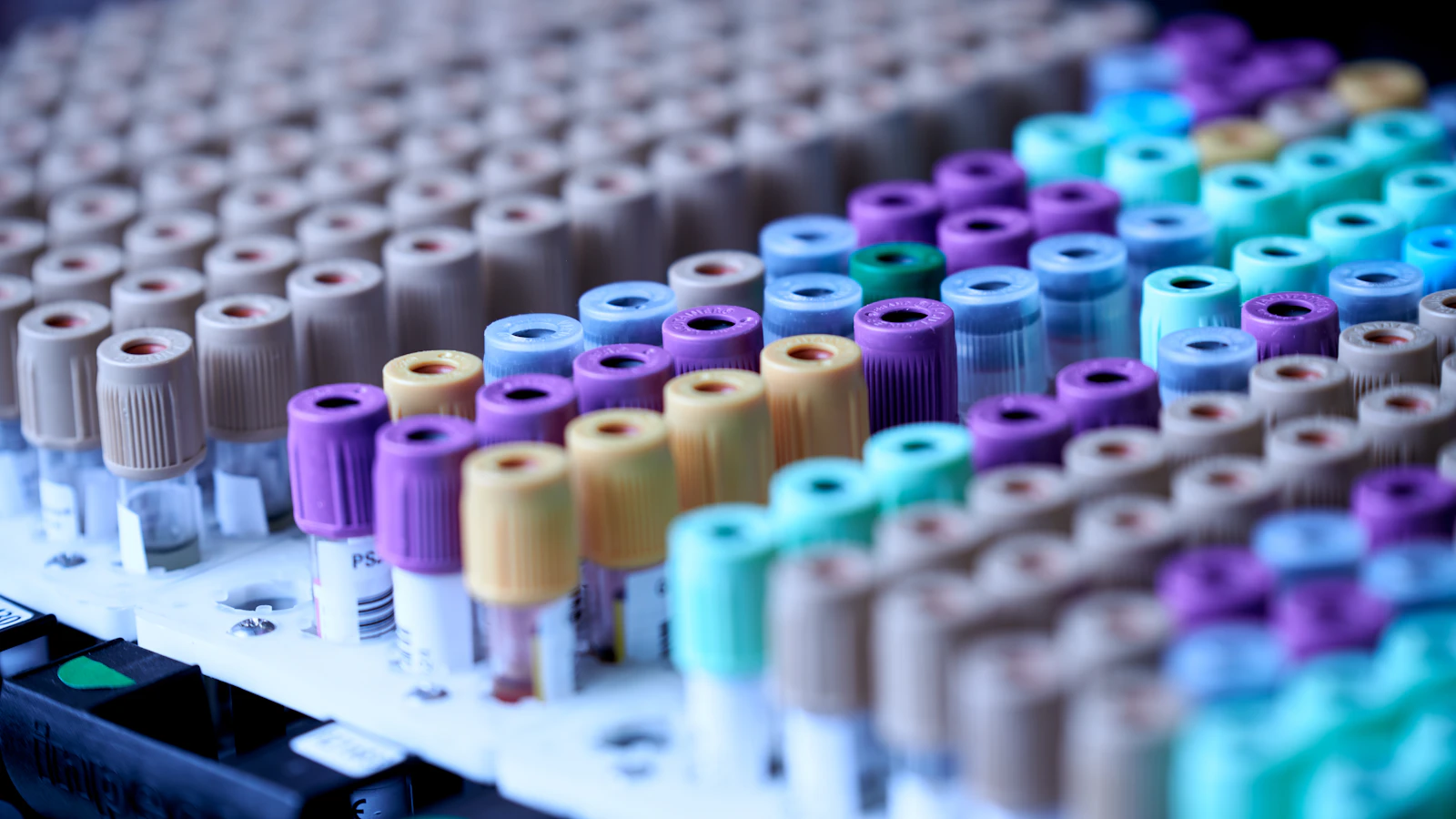
In the Netherlands, nine STIs occur most often: chlamydia, gonorrhoea, genital warts, genital herpes, syphilis, HIV, hepatitis B, trichomonas and pubic lice. In 2024, the RIVM recorded 20,174 chlamydia diagnoses at the Centres for Sexual Health alone, by far the most-found STI. What strikes me: most people can name two or three, while the list is longer and many infections cause no symptoms at all.
Below I list them one by one. For each STI you read how often it occurs and how you can get checked.
- Chlamydia
- Gonorrhoea
- Genital warts (HPV)
- Genital herpes
- Syphilis
- HIV
- Hepatitis B
- Trichomonas
- Pubic lice
Soa Aids Nederland also tracks a few less familiar infections, such as scabies, shigella and mpox. I leave those out of this list, because they are checked less often as a classic STI.
Which STIs are there in the Netherlands?
In the Netherlands there are nine STIs that occur most often: chlamydia, gonorrhoea, genital warts, genital herpes, syphilis, HIV, hepatitis B, trichomonas and pubic lice. Some are caused by a bacterium, others by a virus or a parasite. That difference often shapes how you get checked and whether treatment is possible.
According to Soa Aids Nederland, people sometimes carry an STI unknowingly for a long time, because symptoms can stay absent (Soa Aids Nederland). An STI says nothing about who you are or how many partners you have had.
The order below runs roughly from common to less common. None of the STIs on this list is anything to be ashamed of.
1. Chlamydia: the most common STI
Chlamydia is a bacterial STI and the most-found STI in the Netherlands. In 2024, the RIVM counted more than 20,000 chlamydia diagnoses at the Centres for Sexual Health (RIVM). Chlamydia often causes no symptoms, so you can have it and pass it on without noticing.
When there are symptoms, it can be discharge or a burning feeling when you urinate. A doctor can treat chlamydia with antibiotics.
You can get checked for chlamydia with a urine or blood test, for example together with gonorrhoea and trichomonas in the chlamydia, gonorrhoea and trichomonas check.
2. Gonorrhoea
Gonorrhoea is a bacterial STI too. In 2024 the RIVM registered 13,952 gonorrhoea diagnoses, and that number has run high in recent years. Gonorrhoea can cause discharge or a burning feeling, but sometimes runs without symptoms.
Like chlamydia, gonorrhoea can be treated with antibiotics. Because the symptoms are similar, the two are often checked together.
Not sure which symptoms belong to which STI? We describe them in our overview of STI symptoms in men and women.
3. Genital warts (HPV)
Genital warts are caused by the human papillomavirus (HPV), a virus many people pick up at some point. The warts are sometimes visible around the genitals or anus, but HPV itself often causes no symptoms. Not everyone with HPV develops warts.
A standard STI test on blood or urine usually does not find HPV. A doctor can look at the warts and assess what fits.
Why an ordinary STI test does not pick up HPV is something we explain in our article on HPV as an STI.
4. Genital herpes
Genital herpes comes from the herpes simplex virus (HSV). It can cause painful blisters or sores, but in many people it runs mild or without clear symptoms. The virus then stays dormant in the body and can return now and then.
Herpes is usually diagnosed by a doctor, with a swab from a blister during an outbreak. A home blood test is generally not part of that.
An outbreak is unpleasant, but rarely dangerous. A doctor can think along about what may ease the symptoms.
5. Syphilis
Syphilis is a bacterial STI that runs in stages. In 2024 the RIVM counted 1,798 syphilis diagnoses, more than the year before. The first sign is often a painless sore, which disappears on its own while the infection remains.
What I find sneaky about syphilis is exactly this: because that first sign is so subtle, the infection sometimes goes unnoticed for a long time. A doctor can treat syphilis with antibiotics.
Syphilis can be detected with a blood test. You can get checked for it on its own or as part of a broader STI test.
6. HIV
HIV is a virus that affects the immune system. In 2024 the RIVM registered about 413 new HIV diagnoses. Shortly after infection, flu-like symptoms can appear, but after that you often notice nothing for a long time.
HIV cannot be cured, but it can be treated well with medication, so the virus stays suppressed. Knowing where you stand early gives calm and direction.
An HIV test works reliably after the so-called window period. You can get checked for it with an HIV test.
7. Hepatitis B
Hepatitis B is a viral infection of the liver that is sexually transmissible. Many people have no symptoms, while others experience tiredness or jaundice. A vaccine against hepatitis B exists.
The infection can be detected with a blood test. Viral infections such as HIV and hepatitis can be checked together with the viral infections package.
A doctor can explain what a result means and whether next steps fit.
8. Trichomonas
Trichomonas is an STI caused by a single-celled parasite. In women it can cause discharge or itching, in men it usually runs without symptoms. The infection can be treated with antibiotics.
Trichomonas is often checked together with chlamydia and gonorrhoea, because the symptoms can look alike.
That way you do not have to think about each STI separately, but check the three in one go.
9. Pubic lice
Pubic lice are caused by tiny lice that live in the pubic hair. The best-known sign is itching, and sometimes you can see the lice or their eggs. It is a nuisance, but harmless.
For pubic lice a laboratory test is usually not needed, because you can often see the lice yourself. A product from the pharmacy usually helps to remove them.
When in doubt, a doctor or the pharmacy can take a look.
Which STIs often cause no symptoms?
Many STIs cause few or no symptoms for a long time, especially chlamydia, gonorrhoea and HIV. That means you can have an STI and pass it on without noticing. Feeling fine is therefore no proof that nothing is going on.
According to Thuisarts.nl, STIs regularly run without symptoms, which can make a test the only way to gain certainty (thuisarts.nl).
This is the part I find hardest to explain: you feel completely fine and something can still be going on. In that case a test gives me more calm than waiting it out.
We explain separately why testing without symptoms can still make sense.
Which STIs can you check for at home?
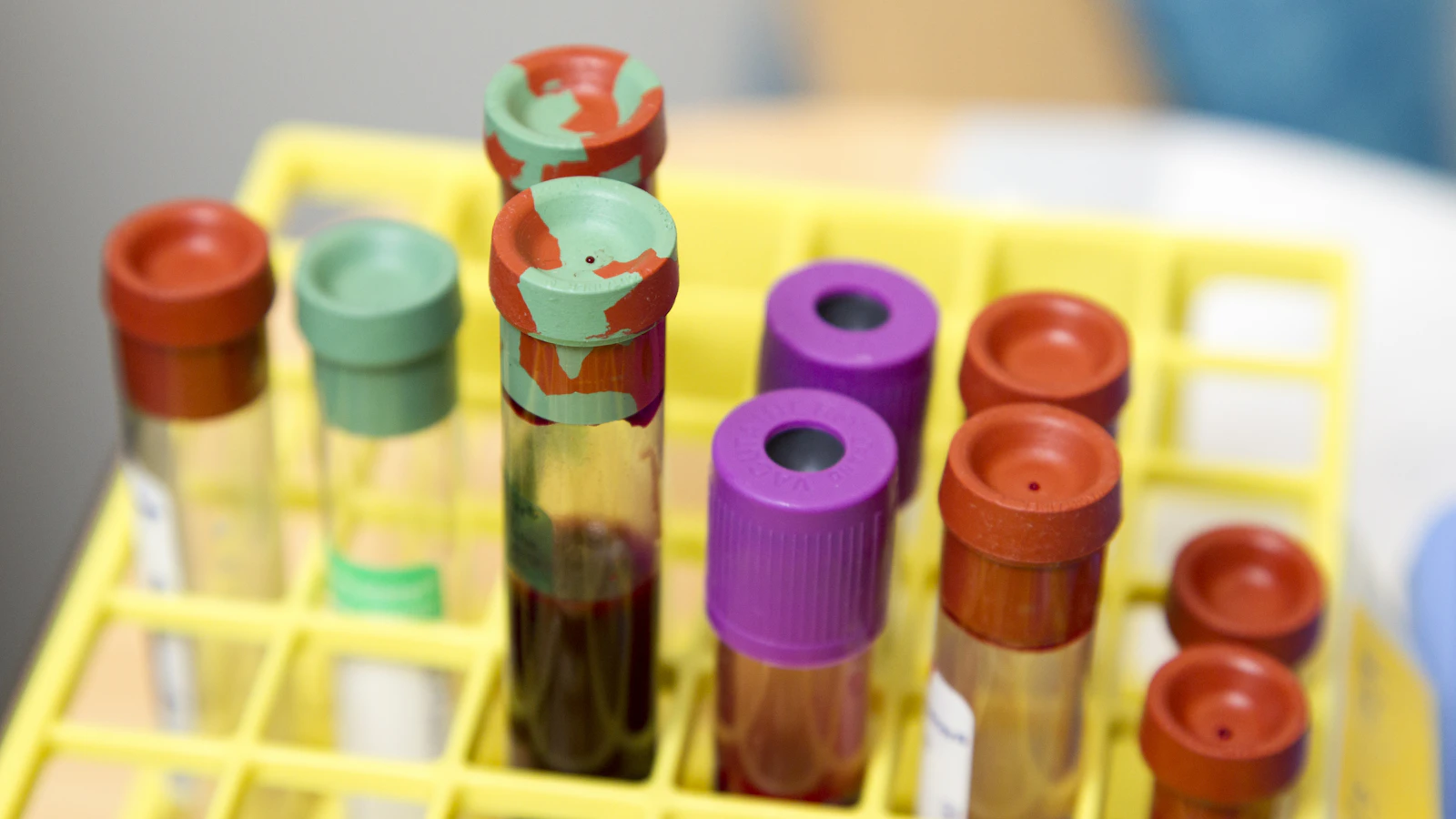
Some STIs can be checked with a home test on blood or urine: chlamydia, gonorrhoea, trichomonas, syphilis, HIV and hepatitis B. Genital warts, genital herpes and pubic lice usually call for a look from a doctor. Below you see which route fits per STI.
| STI | Type | Often symptoms? | How you get checked |
|---|---|---|---|
| Chlamydia | Bacterium | Often not | Home test (urine or blood) |
| Gonorrhoea | Bacterium | Sometimes | Home test (urine or blood) |
| Genital warts (HPV) | Virus | Sometimes visible warts | Doctor looks at the warts |
| Genital herpes | Virus | Sometimes blisters | Doctor takes a swab during symptoms |
| Syphilis | Bacterium | Often mild | Blood test |
| HIV | Virus | Often not | Blood test (after the window period) |
| Hepatitis B | Virus | Often not | Blood test |
| Trichomonas | Parasite | Sometimes | Home test (urine or blood) |
| Pubic lice | Parasite | Itching, visible lice | Often visible yourself, pharmacy product |
Want to know which test fits your situation? Our guide on which STI test you need and when helps you on your way.
How do you choose what fits your situation?
Seeing the list like this, what strikes me most is how different STIs are: one gives blisters, another nothing for years. That is exactly why only a test can give you real clarity. Some people choose to get checked periodically, for instance after a new partner.
Say you had casual sex last month and now you are unsure. Then you can take a test on your own moment and at your own pace, without having to justify it to anyone.
Getting checked for an STI is simply a small piece of looking after yourself.
Sources
- RIVM, Thermometer seksuele gezondheid, 2024 figures (2025) (rivm.nl)
- Soa Aids Nederland, All STIs (2025) (soaaids.nl)
- Thuisarts.nl, STI (2024) (thuisarts.nl)
- World Health Organization, Sexually transmitted infections fact sheet (2024) (who.int)
Every blood test result includes a professional assessment from a BIG-registered doctor. For treatment decisions, discuss your results with your GP.
الكاتب
Discreettest
فحوصات ذات صلة
مقالات ذات صلة

Blocked fallopian tubes: causes and getting pregnant

Prostatitis: symptoms and the STI connection