An anal STI test is a swab of the anus. It detects chlamydia and gonorrhoea in the rectum. A standard STI test on urine does not see those infections. Syphilis and HIV need blood, herpes needs a swab of a blister.
So one test does not cover this. That sounds more awkward than it is. You only need to know which sample belongs to which risk. That is exactly what this page covers.
We start with the infections themselves, then the practical side of taking the sample.
Which STIs can you get in your anus?
Six STIs can sit in the anus or rectum: gonorrhoea, chlamydia, LGV, syphilis, herpes and HPV. The European guideline names four of them as the most common there (de Vries, 2021). Those are gonorrhoea, chlamydia including LGV, syphilis and herpes. HPV sits there too, but behaves differently: you see it as warts.
They differ sharply in how loud they are.
| STI | Symptoms in the anus | Which sample | In our CGT test |
|---|---|---|---|
| Chlamydia | Usually none | Anal swab (PCR) | Yes, with an anal swab |
| Gonorrhoea | Often none, sometimes mucus or pain | Anal swab (PCR) | Yes, with an anal swab |
| LGV | Sometimes heavy, sometimes none | Anal swab plus typing | Partly, typing is extra |
| Syphilis | Painless sore | Blood test | No, separate test |
| Herpes | Painful blisters | Swab of a blister | No, separate test |
| HPV | Warts, usually painless | Visible on examination | No, no standard test |
The top two rows matter most. Those two are the most common and give away the least. For HPV around the anus, warts around the anus is the separate piece.
How do you notice an anal STI?
Usually you do not. Most rectal chlamydia and gonococcal infections cause no symptoms (de Vries, 2021). A study on Reunion island even found that every extragenital infection it detected was symptom-free (Calas, 2021).
When there is something, it is mucus or pus, itching, pain, an empty urge, or some blood. That combination is called proctitis. We work it out in proctitis: symptoms, causes and testing.
The trouble is that those symptoms resemble ten other things.
Haemorrhoids, a fissure, an irritable bowel. Without the context of the preceding weeks, the symptom points you nowhere. The same holds more broadly for STIs without symptoms.
How does an anal STI test work?
With a cotton swab that goes a short way into the anal canal and is rotated. A certified laboratory examines that swab with a PCR. That is the same technique your GP and the public health service use. Your results are usually in your Discreettest account within 2 working days of the blood draw, often the next day. Some markers take longer.
It is not an internal examination. The swab goes in about two to three centimetres, and that is all.
Our test for chlamydia, gonorrhoea and trichomonas runs on that PCR. If your risk was through the anus, that site needs its own swab. The standard sample looks at the genital side.
Can you take an anal swab yourself?
Yes, and the result is just as good. A 2024 study compared self-taken rectal swabs with swabs taken by healthcare staff (Orser, 2024). People took the first set at home, and both were equally reliable.
With us you take the swab yourself, at one of the collection locations and not at home. Those locations are run by our partner labs: a network of independent, certified laboratories. Your sample goes straight into the laboratory instead of spending days in the post first.
For a lot of people that is the point where testing suddenly becomes doable.
The barrier with an anal STI test is rarely the swab or the lab. It is the conversation you would have to have to get one. Taking the sample yourself removes that conversation. How a collection point compares with a home test is in collection point or home test.
When is the best time to test after a risk?
For chlamydia and gonorrhoea, about two weeks after contact is a common moment. For syphilis and HIV it takes longer before a blood test is reliable. Testing too early gives you a result that rules nothing out.
The full timeline per STI is in how long after unprotected sex you can test.
If you have symptoms that are not going away, do not sit out that window. With symptoms a doctor can look sooner and sometimes see something already.
Does a condom protect against an anal STI?
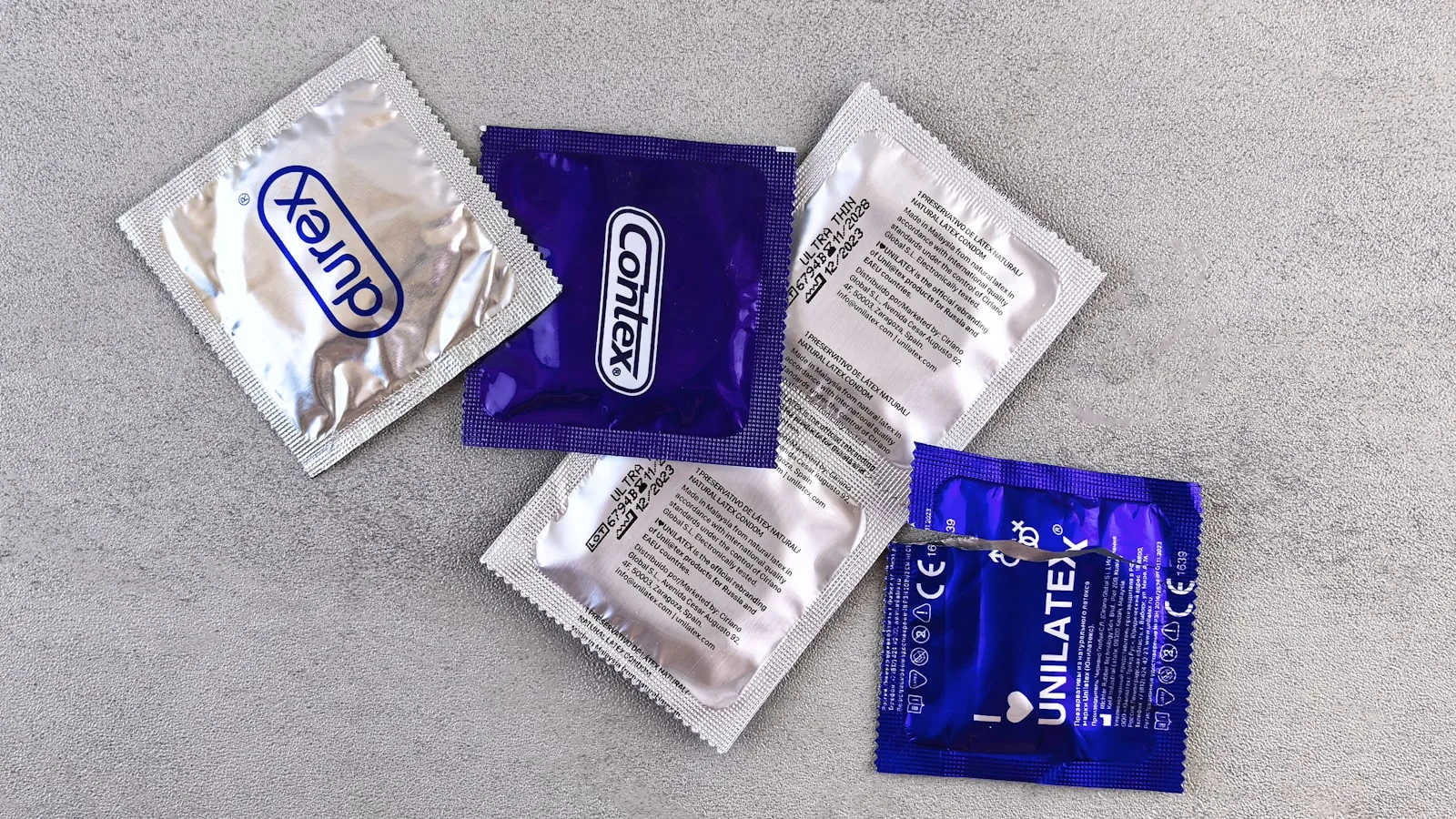
It clearly lowers the risk, but it rules nothing out. The European guideline puts it bluntly: a condom does not guarantee protection from STIs (de Vries, 2021). Many STIs also spread without penetration.
Fingers, toys and skin-to-skin contact all count. That makes "was there a condom" a poorer measure of risk than people assume.
The useful question is: was there receptive anal contact.
Picture two men who both use condoms consistently and get tested every 3 months.
One submits urine only, the other adds an anal swab. The second turned up something that could have stayed unnoticed in the first for months. I think that is the strongest argument against "but I already test".
The RIVM tracks Dutch STI figures through the sexual health centres. Anal infections are included there as standard for certain groups. That is not for nothing: it is the spot a normal STI test looks past. If you test regularly, see also STI testing for MSM.
References
- de Vries HJC, et al. 2021 European Guideline on the management of proctitis, proctocolitis and enteritis caused by sexually transmissible pathogens. Journal of the European Academy of Dermatology and Venereology, 2021. PMID 34057249.
- Calas A, et al. Prevalence of urogenital, anal, and pharyngeal infections with Chlamydia trachomatis, Neisseria gonorrhoeae, and Mycoplasma genitalium: a cross-sectional study in Reunion island. BMC Infectious Diseases, 2021. PMID 33478403.
- Orser L, et al. Testing for extragenital Neisseria gonorrhoeae and Chlamydia trachomatis: At-home pharyngeal and rectal self-swabs are non-inferior to those completed in healthcare settings. PLoS One, 2024. PMID 38768150.
- Chan PA, et al. Extragenital Infections Caused by Chlamydia trachomatis and Neisseria gonorrhoeae: A Review of the Literature. Infectious Diseases in Obstetrics and Gynecology, 2016. PMID 27366021.
- RIVM, STI surveillance Netherlands. Accessed August 2026.
Every blood test result includes a professional assessment from a BIG-registered doctor. For treatment decisions, discuss your results with your GP.
الأسئلة الشائعة
How can I do an anal STI test?
With a swab of the anus. A cotton swab goes two to three centimetres into the anal canal and is rotated. With us you take that swab yourself at a partner lab location, not at home. A certified laboratory examines it with a PCR for chlamydia and gonorrhoea.
What are the symptoms of an anal STI?
Usually none. Most rectal chlamydia and gonorrhoea infections cause no symptoms. When there is something, it is mucus or pus, itching, pain, an empty urge, or some blood. Those symptoms resemble haemorrhoids or a fissure, so only an anal STI test gives certainty.
Can anal itching be a symptom of an STI?
Yes, but rarely as the only symptom. Itching is more often caused by haemorrhoids, a fissure or eczema. Did you have receptive anal contact in the preceding weeks? Then an anal STI test rules an infection out.
Can I test for chlamydia myself?
Yes. A self-collected rectal swab is as reliable as a swab taken by a healthcare worker (Orser, 2024). With us you collect the sample yourself at a collection location. The analysis happens in a certified laboratory, not at home.
الكاتب
Discreettest
Dr. Naimi، طبيب مسجل في سجل BIG الهولندي، يشرف على المعايير الطبية لمحتوانا وتقييماتنا. اقرأ سياستنا الطبية
فحوصات ذات صلة
مقالات ذات صلة

How long is scabies contagious?
How do you get pubic lice? And does shaving help?